


Welcome to the fourteenth edition of my Path to Publication series.
Proofreading is the fourth and final part of the editorial process, which focusses on the finest of details — minor typos, spelling errors and grammatical errors. When these issues have been spotted and resolved, the manuscript is ready to be sent to final typesetting, then printing and distribution.
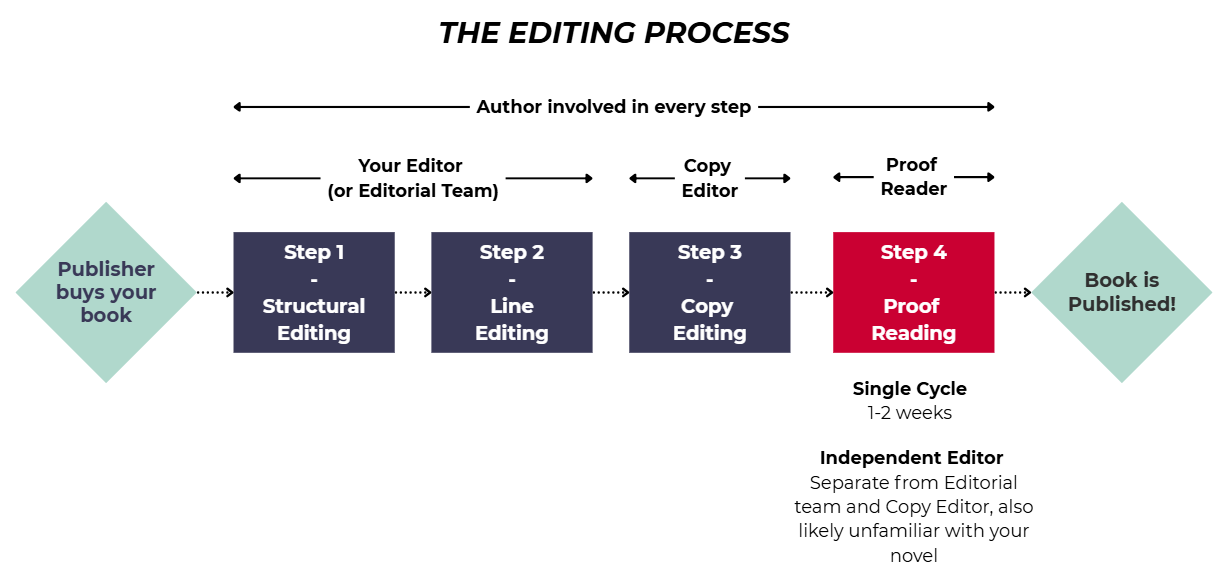
Proofreading is usually a single round, where an independent editor (who is not part of your editorial team and separate from the copy editing) reviews your manuscript for errors, then sends a marked-up version of that manuscript back to your editorial team. You’ll normally then review these edits and action them appropriately.
I completed my proofreading earlier this month, and here’s what happened…
Before proofreading
Before I started proofreading, I asked other debut (and established) authors for their top tips to make proofreading easier. These included:
Changing the format of the manuscript to make it more fresh, e.g.:
If you normally edit on screen, print the manuscript or change the font.
If you normally edit on paper, change the colour of the paper.
Read the document backwards so that you have to focus on each word.
Read the document aloud.
Read the document word by word, using your finger or a ruler to stop yourself from rushing ahead.
Find a friend or family member to read it too, just in case!
I’ve tried each of these in the past, with varying degrees of success.
Editing on paper definitely works, but for smaller pieces. Printing out a roughly 400 page manuscript didn’t feel very environmentally friendly, nor did buying coloured paper especially for the job. Changing the font wasn’t an option since I had a PDF, and even if it was, I was afraid of accidentally buggering something up. No one would thank me for that. I also wasn’t prepared to read a whole manuscript backwards.
Reading aloud, however, has definitely worked for me before. Hearing the words makes errors — and clunky language — stick out like a sore thumb. So I decided that some combination of reading aloud and working through the document line by line would be the best approach.
The proofreading process
I received my proofread manuscript in mid-June 2026. As with the copy edits, they were sent through as a marked-up document. But as I was reading at the same time as the professional proofreader, there were no queries. They would come later.
I was given three weeks to return the amended manuscript, which was more than enough, especially since I was working on Book 2 structural edits at the same time and didn’t want to be flip-flopping between books. So I took the approach of focussing on my proofreading and popping the other book on the back burner.
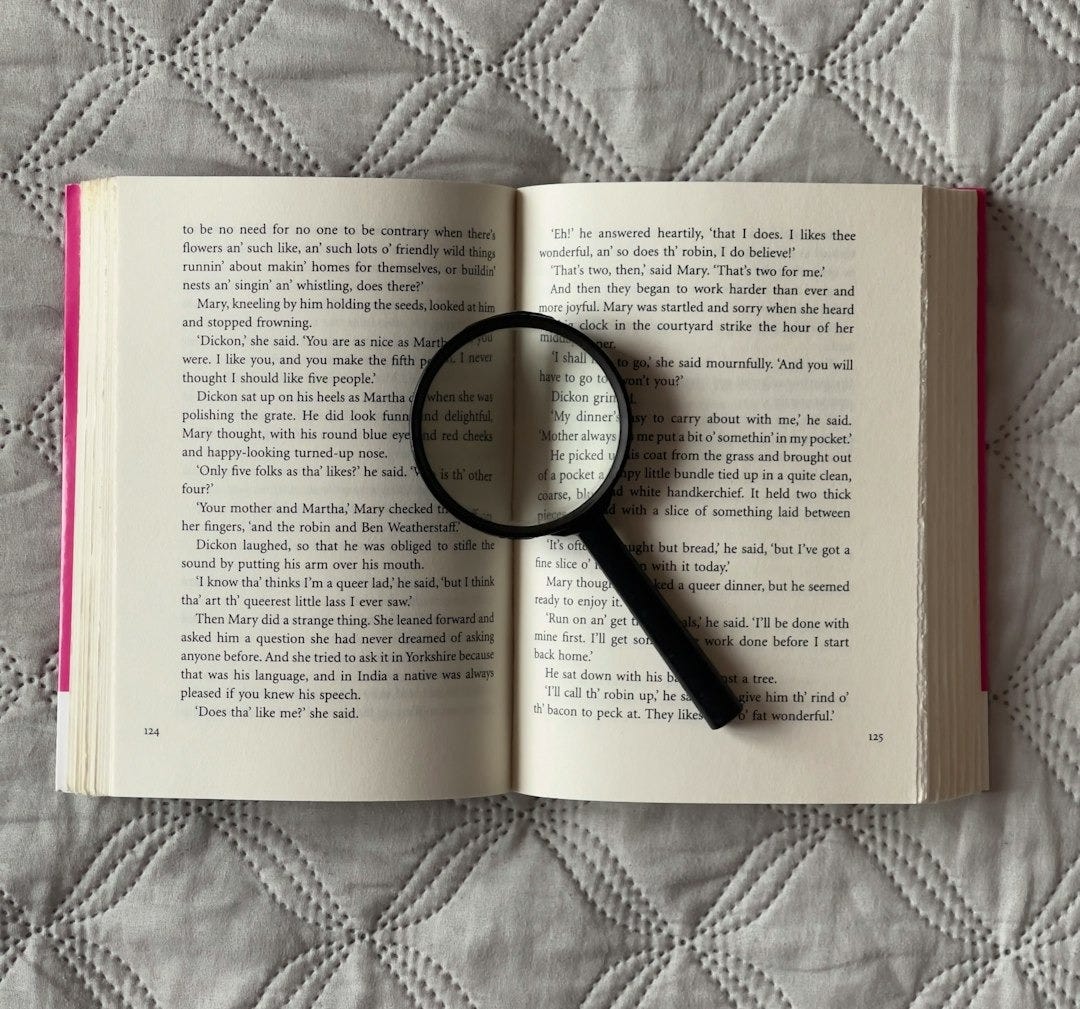
I worked through the manuscript quite slowly, reading each chapter aloud, while leaving notes for anything I wanted to change or question. Reading approximately 10 chapters (or about 18,000 words) at a time, this took three hours per session.
Five sessions allowed me to complete reading, then I used a final session to look over the notes I’d left for myself, decide whether they definitely needed attention and, therefore, referring back to my editorial team.
So, all in all, proofreading took about 18 hours — or three times what I would normally take to read the average book — and all in the space of one week.
I sent the changes back to Editorial and now await any further suggestions from the professional proofreader. However, that wasn’t the end of the story…
Proofreading should come with a health warning!
This isn’t a humble brag; simply a fact. I made myself ill by proofreading so quickly. 18 hours feels reasonable to proofread a book, but by compressing it into six three-hour sessions across seven days, and reading the whole thing aloud, I was absolutely hoarse by the end of the week.
But the biggest impact was the eye strain and pretty nasty migraine I had after staring at the laptop so intensively. No joke at all, I had to take three days off after I’d finished, staying away from screens and bright lights, to start feeling human again.
So, please, learn from my mistake. If you’re given plenty of time to proofread, take it, even if it means doing an hour on the book in the morning, then pivoting to something else in the afternoon.
Which just goes to show that the advice I gave to myself during the editing process (you can read more of that here) doesn’t apply equally to the whole book writing process…
Main Changes and Next Steps
During proofreading, I found 39 ‘errors’ that I sent back to Editorial. These included:
One location mislabelled on the map (entirely my fault).
One character’s age was 54 in one place and early-sixties in another (not sure how that wasn’t found during copy editing…)
Lots of minor word changes (i.e. ‘a’ to ‘the’ or similar)
Several words that may (or may not) need to be italicised
Otherwise, the document was pretty clean. Or so I thought.
When I received the proofreader’s comments a few days later, there were another 421 suggested changes. Of these, 5 were rejected, and 37 were accepted, including:
Replacing several commas with full stops
Removing spaces, or adding hyphens, to concatenate words
Italicising lots of things but also not italicising others2
All in all, it’s fair to say that proofreading is critical, exciting and just a little bit exhausting. But the process has left the manuscript beautifully polished, although it’s inevitable that we’ll have missed something that will only be spotted once the final version of the book is already on the shelves.
Seeing the manuscript complete — with the map, dedication, acknowledgements and biography in place — made me quite emotional. Goodness knows how I’ll react when I hold the proof copy, or the final shelf-ready version, in my hands; but it’s likely that there will be tears. And ugly ones at that.
Until then, I’ll be elbow-deep in structural edits for Anna 2, which I’m due to complete at the end of summer, plus writing a lot more blogs! And, in case you missed it, we recently revealed the stunning cover of The Domino Man!
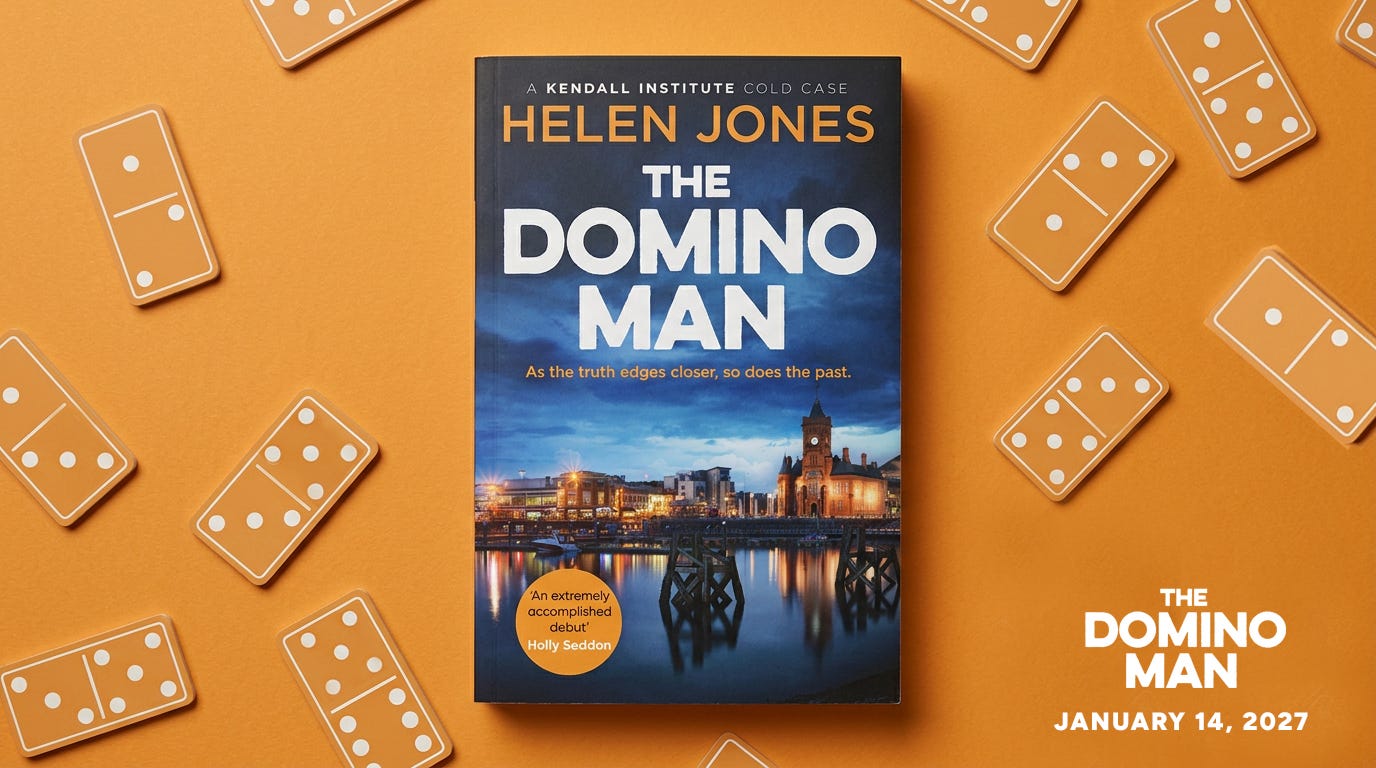
Pre-orders for paperback, ebook and audiobook are now open! If you’d like to pre-order (and please do consider it, it makes a big difference to how well the book is received!) you can find links on my website.
And, once you’ve done that, if you’re looking to take time off over the summer instead, here’s what I’ve enjoyed recently:
TV: The Light in the Hall (Channel 4) and The Burbs (Now TV)
Film: The Sheep Detectives and Fackham Hall (both on Amazon)
Podcasts: Quick Book Reviews with Phillipa Hall3 — excellent episodes with Jane Casey and Olly Smith, and ‘Are Hardback Books Dead’ was a real eye-opener!
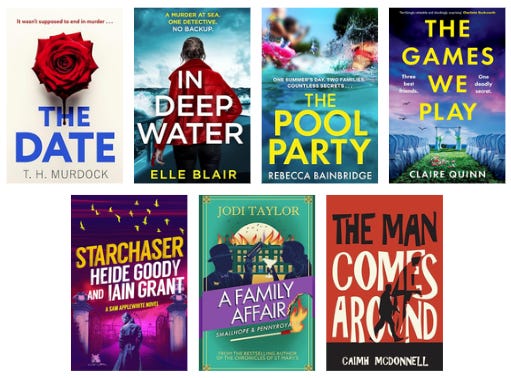
Finally, here’s a few books that I’m looking forward to reading soon:
Finally, here’s what’s coming next on Arsenic & Cold Case:
1st August: Adventures in Harrogate
15th August: Finding Your Tribe
Thanks for reading. See you next time!
Thank you, Douglas Adams, I really should have anticipated that.
Turns out italics are just like commas… absolutely impossible to know where they should go, and everyone seems to have a different opinion.
I did not intend to have so many ‘Halls’ in that paragraph, but I guess it’s in fashion. It’s also the surname of one of my characters, but that was purely coincidental.